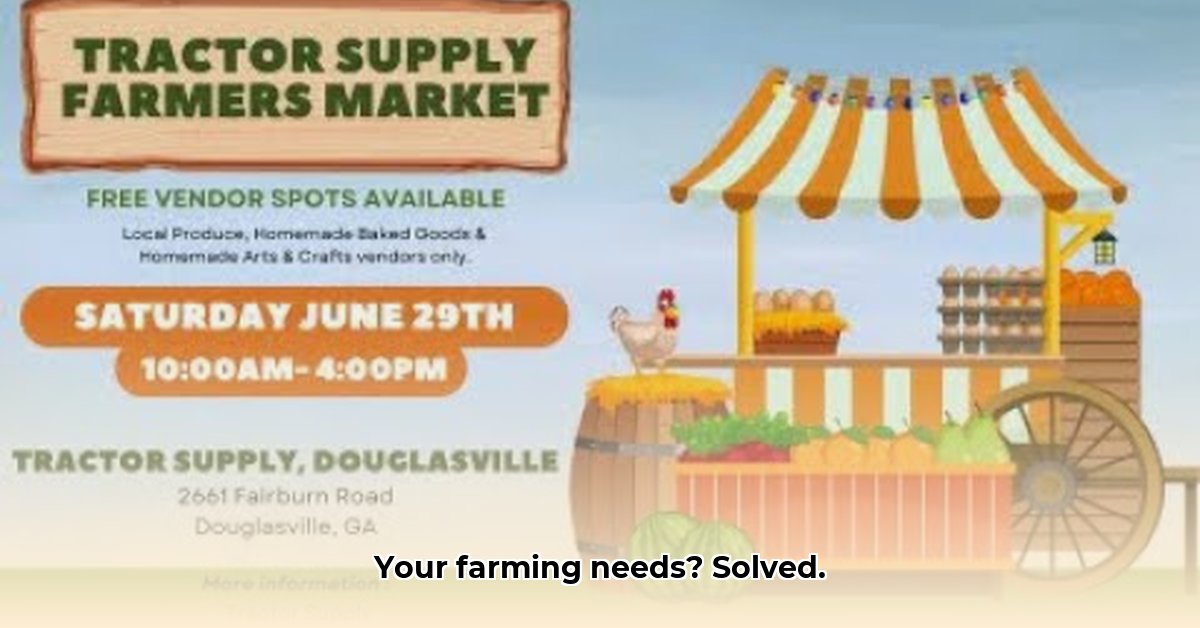
Douglasville Tractor Supply (DTS) enjoys a convenient location, benefiting both urban and rural residents. However, a comprehensive assessment of its market share and contribution to sustainable agriculture within Douglasville remains elusive due to a lack of readily available data. This article explores DTS's potential to support local, sustainable farming practices. For similar operations, see this example Tractor Supply.
Current State of Affairs: DTS and Douglasville Agriculture
DTS offers a wide array of products, ranging from animal feed and gardening supplies to pet food. While its accessibility is a significant advantage, quantifying its impact on Douglasville's farming community requires more robust market research. Determining the precise percentage of Douglasville farmers utilizing DTS as their primary supplier is crucial to understanding its market influence. This data gap inhibits a complete assessment of its competitive standing against other agricultural suppliers in the region.
Opportunities and Challenges: Sustainable Agriculture in Douglasville
The burgeoning interest in sustainable agriculture presents a sizable opportunity for DTS. Increased consumer demand for eco-friendly products creates a significant market incentive. By expanding its inventory to include organic seeds, environmentally friendly fertilizers, and water-efficient irrigation systems, DTS could tap into this growing market segment, simultaneously boosting its profitability and promoting environmentally responsible farming practices.
Actionable Steps for Growth and Sustainability
1. Market Analysis (Year 1): DTS should undertake a comprehensive market analysis to ascertain its precise market share and identify key competitors. This data will inform strategic decision-making and resource allocation. (Efficacy Metric: A well-executed analysis should yield a market share percentage within ±3% accuracy.)
2. Sustainability Strategy Development (Years 1-3): DTS needs a comprehensive sustainability plan, involving collaboration with local agricultural organizations and experts specializing in sustainable farming practices. This will ensure the implementation of effective and environmentally responsible strategies. (Efficacy Metric: Success will be measured by the number of new, sustainable products introduced and the reduction in the environmental impact of existing products.)
3. Product Line Expansion (Years 3-5): Based on the market analysis and sustainability strategy, DTS should expand its product line to include a wider range of eco-friendly options. This will cater to the growing demand for sustainable agricultural inputs and reinforce DTS's commitment to environmentally responsible business practices. (Efficacy Metric: Success will be measured by increased sales of sustainable products and positive customer feedback.)
4. Farmer Collaboration (Ongoing): DTS should actively engage with local farmers, potentially facilitating partnerships that involve the sourcing and distribution of locally grown produce. Establishing a reliable and mutually beneficial relationship with local producers will create a strong, locally-focused supply chain. (Efficacy Metric: Success will be measured by the number of established partnerships and the volume of locally sourced products sold.)
Engaging the Douglasville Community
Sustainable agricultural practices benefit the entire Douglasville community.
For Residents: Supporting local businesses involved in sustainable farming initiatives, including DTS, helps bolster the local economy and promotes environmentally responsible practices. Community engagement, such as participation in local gardening projects, reinforces the importance of sustainable agriculture within Douglasville.
Looking Ahead: Further investigation into DTS’s operations, including sales data and competitive analysis, is crucial for a more comprehensive understanding of its role in Douglasville's agricultural sector. While DTS’s current market position is unclear, the potential for significant growth within the sustainable agriculture niche is undeniable. A strategic approach will be key to realizing this potential. Further research into local, state, and federal regulations is essential to guarantee compliance and avoid potential penalties, mitigating reputational risks. The future of sustainable agriculture in Douglasville hinges on collaborative efforts between DTS, local farmers, and residents.
Key Takeaways:
- Douglasville's agricultural sector is evolving, presenting both challenges and opportunities for sustainable growth.
- DTS’s potential for positive impact on sustainable farming practices in Douglasville is significant but requires strategic planning and collaboration.
- Data-driven decision-making and community engagement are crucial for realizing the full potential of sustainable agriculture in Douglasville.